Best Time to Visit Iceland for Adventure Tours

The best time to visit Iceland depends entirely on what you want to do. Summer opens the highland roads and gives you endless daylight for hiking and exploring, while winter is the only season for glacier ice caves and the northern lights. Pick the season that matches the experience you are chasing, and the rest of the trip falls into place.
This guide breaks down Iceland's adventure seasons month by month, covering daylight, weather, aurora odds, and which tours actually run when. By the end you will know exactly which travel window fits your bucket list.
Is the Best Time to Visit Iceland Summer or Winter?
The clearest fork in any Iceland adventure plan is summer highlands versus winter ice caves, and you usually cannot have both on one trip. The highland interior opens only from late June to early September, while glacier ice caves are safe to enter only in the cold months, roughly November through March.
Iceland's highland F-roads cross unbridged rivers and rough volcanic terrain. They stay closed until snowmelt and road inspections allow safe passage, which is typically late June. Places like Landmannalaugar become reachable only in this short window. If colorful rhyolite mountains and backcountry hot springs top your list, summer is non-negotiable.
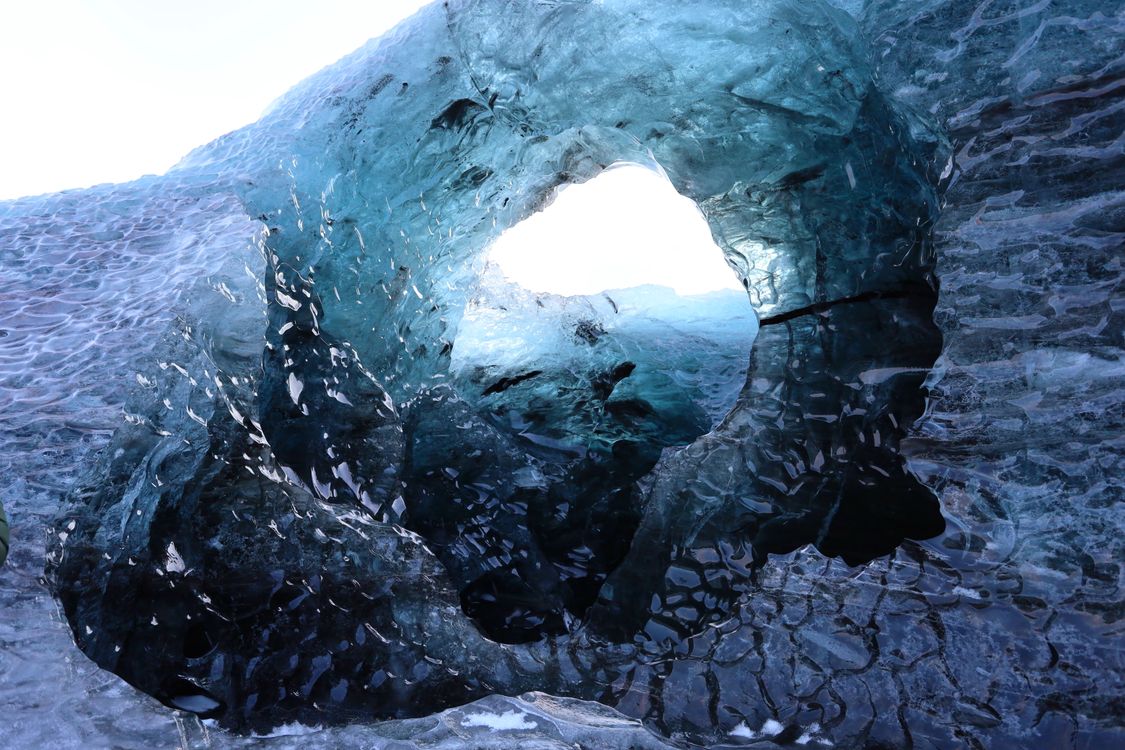
Ice caves work in reverse. These blue chambers form inside glaciers and stay structurally sound only while winter cold keeps the ice frozen in place. Guides survey them each season before any tour enters. For a sense of what the two experiences involve, our guide to Landmannalaugar by 4x4 covers the summer side in detail.
The two seasons also feel completely different underfoot. Summer in the highlands is about long drives across lava fields, wading rivers in a high-clearance vehicle, and soaking in geothermal pools under a sky that never fully darkens. Winter is quieter and sharper: frozen waterfalls, snow-dusted craters, and the hush inside a glacier. Deciding between them is really deciding what kind of memory you want to bring home.
When Can You See the Northern Lights?
The northern lights are visible in Iceland from roughly mid-September through April, when nights grow long and dark enough to reveal them. The Icelandic Meteorological Office notes that the aurora needs dark, partly clear skies, and it publishes a daily forecast on a 0 to 9 activity scale (Icelandic Meteorological Office, 2025).
Daylight is the deciding factor, and Iceland's swing is extreme. In Reykjavik, the June solstice brings about 21 hours of daylight, so the sky never truly darkens. By the December solstice, daylight drops to roughly four hours. That long winter darkness is exactly what makes the aurora season possible.
Clear skies and distance from city light matter more than picking a precise month. A Super Jeep can carry you away from Reykjavik's glow to darker ground, which improves your odds on any given night. Aurora hunts with 4x4sprinticetravel are planned around the night's weather and darkness rather than a fixed route.
Daylight Hours by Month
Rough day length in Reykjavik shifts dramatically across the year:
- December: about 4 to 5 hours
- February: about 8.5 hours
- April: about 15 hours
- June: about 21 hours
- August: about 16 hours
- October: about 10 hours
Those numbers shape your day. Winter trips run on a short, precious block of light, so tours start early and keep tight schedules. Summer trips can stretch late into a bright evening.
What Is the Weather Like in Southwest Iceland?
Southwest Iceland, the region around Reykjavik and the Golden Circle, stays cool, wet, and changeable all year rather than bitterly cold. The 2024 annual average temperature in Reykjavik was 4.3 degrees Celsius, which ran 0.9 degrees below the 1991 to 2020 mean (Icelandic Meteorological Office, 2025). Mild for the latitude, but never warm.
Rain is a constant companion. According to the same Met Office summary, Reykjavik recorded 827.7 mm of precipitation in 2024, about 95 percent of the long-term average, spread across 144 days with measurable rainfall. In practice, that means you should expect wet days in any month and pack accordingly.
The old local saying holds: if you do not like the weather, wait five minutes. Conditions flip fast, which is why guided vehicles with experienced drivers matter so much here. Whatever the season, waterproof layers and warm boots earn their place in your bag.
Which Tours Run in Which Seasons?
Season decides your menu of tours. Highland routes run in summer, ice caves and dedicated aurora hunts run in winter, and a few flagship routes such as the Golden Circle operate year-round with a different character in each season.
Here is the broad pattern across the year:
- Highlands and F-road routes: late June to early September
- Glacier ice caves: November through March
- Northern lights hunts: mid-September through April
- Golden Circle and south coast: year-round
The Golden Circle is the reliable all-season choice. In summer you get long light and green landscapes; in winter you get frosted waterfalls and a chance to chain an aurora hunt onto the same day. It stays accessible even when the highlands are closed by snow.
A capable vehicle is what makes shoulder-season and winter travel work at all. Standard rental cars are restricted from F-roads and struggle on snow and ice, which is one reason guided Super Jeep tours stay open when self-drive options close.
Shoulder seasons deserve a closer look too. Late September and early October still have reasonable daylight, autumn colour in the lowlands, and dark enough nights for the aurora to appear. April offers the reverse: lengthening days, receding snow, and the tail end of ice cave season in some glaciers. These in-between weeks often bring smaller crowds and lower prices, with the trade-off that conditions can shift quickly from one day to the next.
Group size and comfort change with the season as well. Summer tours tend to run longer and cover more ground while the light holds, so you can pack several sites into one day. Winter tours work around a shorter window and a weather forecast, which is why a flexible, driver-led itinerary beats a fixed self-drive plan when the roads are icy and the daylight is scarce.
How Do You Match Your Travel Window to Your Bucket List?
Start from the single experience you most want, then build the season around it. Iceland welcomes well over two million international visitors a year now, and they do not all come for the same thing. Your ideal month is the one that delivers your top priority.
Use a short decision rule:
- Northern lights are the dream: travel September through March, and plan for a few nights to beat the weather.
- Highlands and hiking are the dream: travel July or August, when F-roads are reliably open.
- Ice caves are the dream: travel November through March.
- You want a bit of everything with easy conditions: travel in the summer shoulder of late June or early September.
If your wish list spans several seasons, two shorter trips often beat one compromise visit. A guided Super Jeep also reaches ground that standard rental cars cannot, which widens what any single season can deliver.
The next step is simple: name your one must-do experience, check the season it falls in, and book a guided tour that runs in that window. 4x4sprinticetravel operates Super Jeep tours across all four seasons, so once you have fixed your travel dates you can match them to a route that actually runs then rather than reshaping your trip around the weather.
Frequently asked questions
What is the best time to visit Iceland for first-time adventure travelers?
Late June through August offers the mildest weather, open highland roads, and nearly round-the-clock daylight, which makes it the easiest season for a first trip.
When can you see the northern lights in Iceland?
The aurora is visible from roughly mid-September through April, when nights are long and dark. Clear skies and low light pollution matter more than any single month.
Are Iceland's highlands open in winter?
No. The highland F-roads usually open only from late June to early September. In winter they are closed and reachable only on specialized guided Super Jeep tours.
Is Iceland cold enough to need special gear year-round?
Yes. Reykjavik's 2024 annual average was 4.3 degrees Celsius, so layers, waterproofs, and warm boots are sensible in every season, especially on glaciers.